
Drilling Through Hard Rock: How DI22 Drill Rods Excel in High-UCS Formations
In the world of deep underground mining, not all rock is created equal. For contractors and mine operators, encountering high Unconfined Compressive Strength (UCS) formations—such as massive granite, hematite, or highly abrasive magnetite—is the ultimate test of your equipment’s integrity. While standard drill rods may suffice in softer, more predictable ground, they often become a bottleneck in hard-rock environments.
If your operation is currently pushing into deeper, more resilient strata—often exceeding 250 MPa (36,000 psi) in UCS—you are likely all too familiar with the spiraling costs of drill string failure. The DI22 Raise Drill Rod system was built precisely to turn these geological challenges into manageable operational goals.
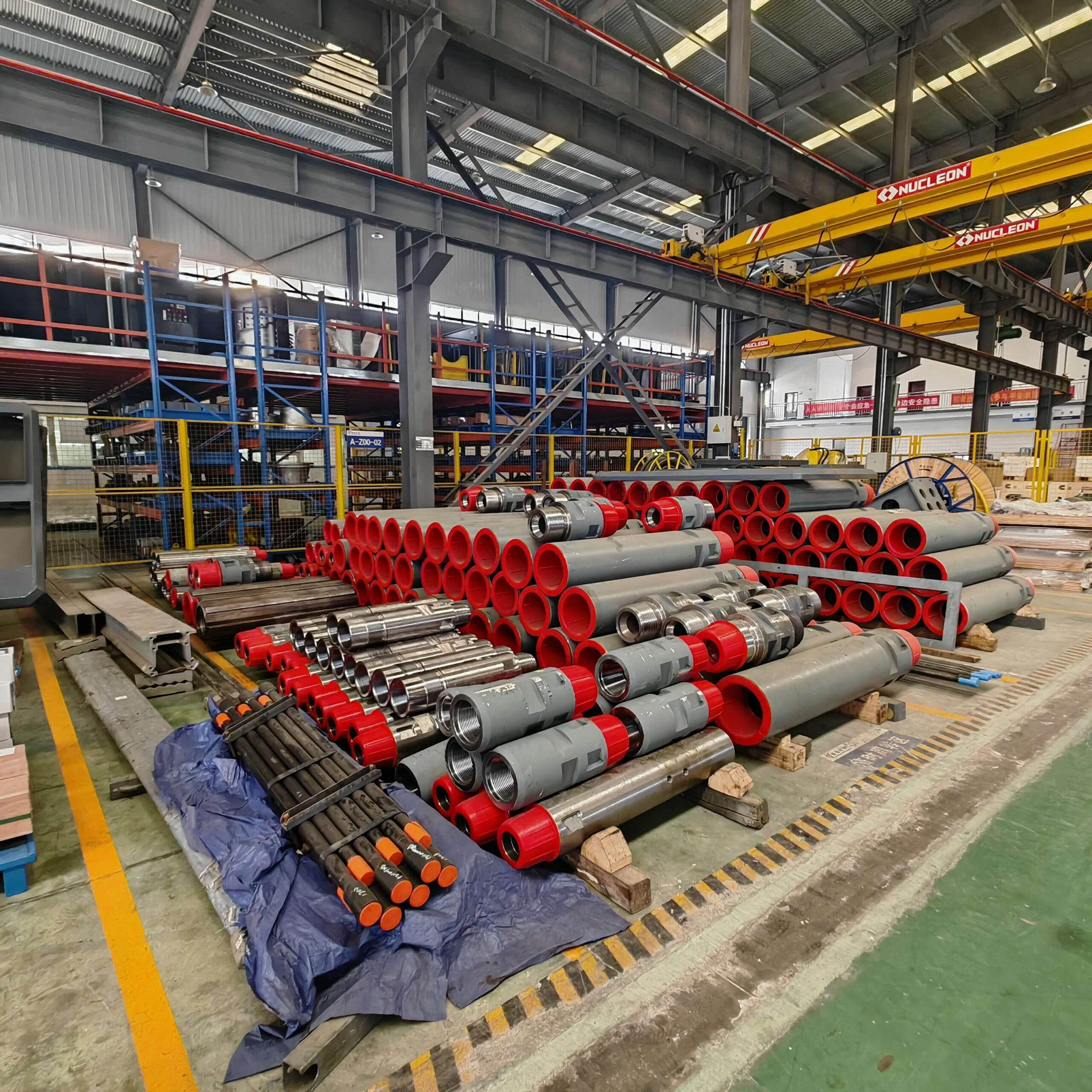
The primary enemy of a drill string in high-UCS rock is "dynamic fatigue" coupled with abrasive wear. As the raise boring head grinds against rock with high compressive strength, the vibrational energy is transmitted directly back into the drill string.
In low-grade rods, this energy manifests as:
Micro-cracking: Stress concentrations at the thread roots that eventually lead to catastrophic rod failure.
Surface Pitting: Abrasive minerals (like quartz or pyrite) in the Cuttings act as grinding agents, rapidly degrading the outer diameter (OD) of the rod if it lacks sufficient surface hardness.
Thread Deformation: Under extreme Torque/RPM ratios, poor-quality thread profiles deform, leading to the dreaded "thread seizing" or "galling" that grinds production to a halt.
The DI22 system is not a "one-size-fits-all" solution. It is specifically engineered to counteract the forces of high-UCS drilling.
High-Density Alloy Composition: We utilize vacuum-degassed, chromium-molybdenum alloy steel, heat-treated to a precise HRC 38–42 surface hardness. This provides the ideal balance between ductility (to absorb shock) and hardness (to resist abrasive wear).
Load Distribution Architecture: The DI22 thread geometry is optimized for load distribution. By increasing the effective flank angle and surface area within each joint, we prevent the localized stress spikes that cause traditional rods to snap under heavy rotational pressure.
Fatigue-Resistant Stress Relief: Our rods feature engineered stress-relief grooves at the pin and box ends, which act as "dampers" to isolate the thread connection from the extreme torsional stress generated at the cutter head.
In hard rock, the speed at which you clear cuttings from the hole is just as important as the force of the cut. If cuttings are allowed to build up around the drill string, the hydrostatic friction increases exponentially, leading to overheating and potential string entrapment.
Our DI22 Stabilizers feature a proprietary High-Flow Spiral Groove design that functions as a natural pump, facilitating the efficient upward flow of cuttings even in the tightest drilling tolerances. This keeps the drill string cooler, reduces internal friction, and allows for higher penetration rates without the risk of thermal fatigue.
In recent field trials within the Pilbara region of Western Australia, where operations frequently encounter magnetite-rich formations, the DI22 system demonstrated a 22% increase in Mean Time Between Failures (MTBF) compared to standard API-threaded rods. By maintaining string rigidity and reducing the need for constant "trip-outs" for rod inspections, the site reported a significant reduction in the overall Cost-per-meter (CPM).
To maximize the life of your DI22 string in high-UCS environments:
Monitor Torque Fluctuations: If you observe sudden torque spikes, it is often a sign of insufficient cuttings removal rather than cutter dulling. Check your fluid circulation rates.
Thread Maintenance: Always apply a heavy-duty, copper-based thread compound. High-UCS drilling generates significant heat; proper lubrication is the only defense against micro-welding in the threads.
Rotation Management: Avoid "drilling at resonance." Adjusting your RPM slightly can move the drill string out of its natural harmonic frequency, significantly reducing fatigue-inducing vibrations.
In an industry where geology dictates the terms, your only defense is superior engineering. The DI22 Raise Drill Rods and Stabilizers are designed to be the robust foundation your operation needs to conquer high-UCS rock.
Are you facing unexpected downtime in your hard-rock drilling projects? Contact our technical support team to analyze your current drilling parameters. We can help you customize your drill string configuration to ensure peak performance in even the most abrasive ground.
This website uses cookies to ensure you get the best experience on our website.





 Phone
Phone E-mail