


Heavy-duty raise boring
Heavy-duty raise boring is a specialized underground excavation method used to create vertical or inclined shafts, raises, ventilation openings, ore passes, and service passages in hard rock environments. It is widely valued in mining, tunneling, hydropower, and civil engineering projects because it offers a safer, more controlled, and often more cost-effective alternative to conventional blasting methods. The term “heavy-duty” refers to the large-scale, high-power equipment designed to handle challenging geological conditions, deep excavations, and large diameter openings.The process typically begins with the drilling of a pilot hole from one level to another. This pilot hole is crucial because it connects the top and bottom of the intended raise and provides a guide for the reaming stage. Once the pilot hole is completed, a reaming head is attached to the drilling string on the upper side. The reaming head is then pulled or pushed through the rock, enlarging the hole to the required diameter. As the cutting head rotates, disc cutters or other specialized cutting tools break the rock into manageable fragments, which fall naturally to the lower level for removal.Heavy-duty raise boring machines are engineered to deliver high torque, strong thrust, and stable performance under difficult conditions. They are often used for openings with large diameters and significant lengths, where precision and reliability are essential. These machines can operate in extremely hard rock and maintain accurate alignment over long distances, which is critical for ventilation shafts and ore passes. Advanced control systems help operators monitor drilling parameters such as rotation speed, thrust, penetration rate, and vibration, allowing for better efficiency and tool life.One of the major advantages of heavy-duty raise boring is safety. Because most of the excavation takes place without workers entering the unexcavated face, exposure to rockfall, dust, and blasting hazards is significantly reduced. In addition, the method produces smoother walls and more uniform dimensions than many traditional excavation techniques. This can lower the need for additional support or secondary trimming. The reduced use of explosives also makes the process less disruptive to surrounding structures and underground operations.However, heavy-duty raise boring also presents technical challenges. Equipment setup is complex, transportation of large components can be difficult, and the method requires careful planning of the pilot hole and breakthrough points. Geological problems such as fractured rock, water inflow, or variable hardness can affect performance and increase wear on cutting tools. Proper maintenance, accurate surveying, and experienced operation are therefore essential for success.Overall, heavy-duty raise boring is a powerful and efficient solution for large underground excavation projects. Its combination of safety, precision, and productivity makes it an important technology in modern mining and infrastructure development.
Products
Category:
-
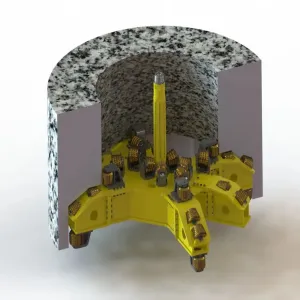
Heavy-Duty Raise Boring: Why Integral Reaming Heads Are the Top Choice for Unrestricted Sites
Category: Raise Boring ToolsBrowse number: 2Number:Release time: 2026-07-03 11:25:29While modular and extendable reaming heads are fantastic for bypassing underground transport restrictions, there are many mining and civil engineering projects where transport space is abundant.
News
Category:
No search results found!
Case
Category:
No search results found!
Video
Category:
No search results found!
Download
Category:
No search results found!
Job
Category:
No search results found!
Featured Products
No search results found!



 Phone
Phone E-mail