


Rock Mining Bit
A rock mining bit is a specialized cutting tool designed to break and fragment hard rock during drilling and excavation operations. It is commonly used in mining, tunneling, quarrying, geothermal drilling, and large-scale construction projects. The bit is mounted on a drill string or a rotary drilling machine and transfers mechanical energy from the equipment into the rock, crushing, chipping, or grinding it into smaller pieces.Most rock mining bits are manufactured from high-strength alloy steels combined with wear-resistant inserts, often made of tungsten carbide or similar hard materials. These inserts are strategically positioned on the bit’s face and gauge to maximize penetration and maintain borehole diameter. The body of the bit must withstand high impact loads, torsional stress, and abrasive wear while operating in harsh underground environments.There are several main types of rock mining bits, each suited to different ground conditions and drilling methods. Button bits, for example, feature hemispherical or conical carbide buttons and are widely used in percussive and top-hammer drilling. They deliver repeated high-energy impacts to the rock surface, making them ideal for medium to very hard formations. Cross bits and chisel bits, with their cutting edges arranged in cross or wedge patterns, are more common in older or lighter drilling applications.In rotary and rotary-percussive drilling, tricone bits and PDC (polycrystalline diamond compact) bits are often used. Tricone bits incorporate three rotating cones equipped with teeth or inserts that roll and crush the rock. They perform well across a wide range of formations, from soft sedimentary layers to hard crystalline rock, depending on the cutting structure. PDC bits use fixed synthetic diamond cutters that shear the rock in a continuous cutting action, delivering high rates of penetration in compatible formations and offering long service life under stable drilling conditions.Efficient rock mining bit performance depends on several factors: rock hardness and abrasiveness, drilling method, bit design, rotational speed, feed force, and flushing medium. To remove cuttings and cool the bit, air, water, or drilling fluid is directed through internal channels and nozzles. Proper flushing improves penetration rate, reduces bit wear, and helps prevent bit balling or clogging in fractured or clay-rich zones.Bit selection is critical for cost-effective mining operations. Using a bit optimized for the geological formation can reduce energy consumption, extend bit life, and minimize downtime due to bit changes. Modern design approaches rely on rock mechanics data, laboratory testing, and field trials to match bit geometry, insert type, and gauge protection to specific rock conditions.Maintenance and reconditioning also play an important role. Worn bits can often be reground, re-tipped, or refurbished to restore cutting performance, particularly in percussive drilling applications. Systematic bit monitoring—tracking penetration rate, vibration, and wear patterns—helps operators decide the optimal replacement interval and refine drilling parameters.Overall, the rock mining bit is a key element in the drilling system, directly influencing productivity, safety, and operational cost in rock excavation and resource extraction.
Products
Category:
-
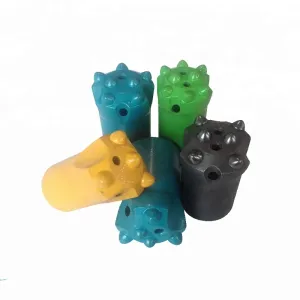
The Manufacturing Process of a Fully Ground Taper Rock Mining Button Drill Bit
Category: Tapered Connection Drill BitBrowse number: 35Number:Release time: 2026-04-23 02:36:08A fully ground taper drill bit outperforms milled alternatives because the entire geometry—flutes, lands, and Morse taper—is finished on a 5‑axis CNC grinder.
News
Category:
No search results found!
Case
Category:
No search results found!
Video
Category:
No search results found!
Download
Category:
No search results found!
Job
Category:
No search results found!
Featured Products
No search results found!



 Phone
Phone E-mail