


Hard Rock Boring Bit
A hard rock boring bit is a specialized drilling tool designed to penetrate extremely dense, abrasive, and compact geological formations. It is widely used in mining, tunneling, geotechnical exploration, geothermal drilling, and foundation construction, where ordinary drilling tools would wear out quickly or fail to make progress. Its main purpose is to cut, crush, and fracture hard rock efficiently while maintaining structural strength and operational stability under high stress.The design of a hard rock boring bit usually emphasizes durability, impact resistance, and cutting efficiency. Because hard rock places severe demands on the drilling system, the bit must be made from high-strength materials such as hardened steel, tungsten carbide, or other wear-resistant alloys. The cutting elements are arranged to concentrate force on the rock surface, allowing the bit to break the formation through controlled rotation, pressure, and sometimes percussion. In many applications, the bit works together with a powerful drilling machine or boring system that supplies torque, thrust, and flushing fluid to remove rock cuttings.One of the most important features of a hard rock boring bit is its ability to resist abrasion. Hard rock formations often contain quartz, granite, basalt, and other extremely tough materials that can rapidly dull weak cutting edges. To address this, the bit may include reinforced cutters, replaceable inserts, or specially engineered teeth that maintain performance over long periods. Effective cooling and debris removal are also essential. During drilling, friction generates significant heat, and rock fragments must be cleared from the borehole to prevent clogging, overheating, and reduced efficiency.There are different types of hard rock boring bits depending on the drilling method and application. Some are designed for rotary drilling, where continuous rotation grinds and cuts the rock. Others are intended for percussive or hammer-assisted drilling, where repeated impacts help fracture the formation. Certain bits are optimized for large-diameter boring operations, while others are used for smaller exploratory holes. The choice of bit depends on factors such as rock hardness, borehole size, required penetration rate, and equipment compatibility.Performance is influenced by many operating conditions. Proper weight, rotation speed, and flushing pressure can significantly improve drilling speed and bit life. If the bit is pushed too aggressively, it may overheat or wear unevenly; if the pressure is too low, progress may become slow and inefficient. For this reason, operators must carefully match the bit to the ground conditions and monitor wear throughout the job.In practical use, a hard rock boring bit offers reliability and productivity in some of the most demanding drilling environments. Its robust construction, specialized geometry, and wear-resistant materials make it an essential component in modern rock excavation and subsurface engineering. By enabling efficient penetration into hard geological formations, it supports major infrastructure projects and resource development around the world.
Products
Category:
-
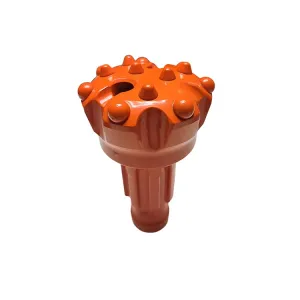
178mm DHD370 DTH Bit for Hard Rock Boring & Blasting
Category: DTH drill bitBrowse number: 46Number:Release time: 2026-05-11 08:43:42DHD370 178mm DTH button bit for efficient rock fragmentation. Superior performance in mining and quarrying. Factory price and global delivery. Shop here!
News
Category:
No search results found!
Case
Category:
No search results found!
Video
Category:
No search results found!
Download
Category:
No search results found!
Job
Category:
No search results found!
Featured Products
No search results found!



 Phone
Phone E-mail