


Coupling Sleeve
A coupling sleeve is a cylindrical mechanical component used to connect two shafts, rods, or pipes together in a secure and stable manner. It serves as a simple but highly effective interface that helps transmit torque, motion, or fluid flow between two aligned parts. Coupling sleeves are widely used in machinery, automotive systems, construction equipment, industrial pipelines, and many other engineering applications where reliable connection and mechanical continuity are required.The main function of a coupling sleeve is to join two components while maintaining proper alignment and ensuring efficient force transfer. In shaft applications, it helps connect two rotating shafts so that power can be transmitted smoothly from one side to the other. In pipe systems, a coupling sleeve can be used to link two pipe ends, allowing a sealed or semi-sealed connection depending on the design. Because of this versatility, coupling sleeves are essential in both mechanical and fluid-handling systems.Coupling sleeves are manufactured in various sizes, materials, and designs to suit different working environments. Common materials include carbon steel, stainless steel, aluminum, brass, and engineering plastics. Steel sleeves are often preferred for high-strength and heavy-duty applications, while stainless steel is selected for environments where corrosion resistance is important. Plastic sleeves may be used in lightweight systems or applications where electrical insulation or chemical resistance is needed.The design of a coupling sleeve may be simple or highly specialized. A basic sleeve coupling usually consists of a hollow cylinder with internal dimensions matching the connected parts. It may use keys, set screws, clamps, threads, or press-fit features to hold the components in place. More advanced designs can include flexible elements that absorb vibration, compensate for small misalignments, and reduce wear. These features improve performance and extend the service life of the connected system.One of the key advantages of a coupling sleeve is ease of installation. Compared with more complex coupling systems, a sleeve-type connector is often compact, lightweight, and straightforward to assemble. This makes maintenance and replacement easier, especially in equipment that requires frequent servicing. In addition, the sleeve design can help reduce downtime by allowing quick connection and disconnection when necessary.Coupling sleeves also contribute to system safety and reliability. By providing a stable connection, they help prevent slippage, leakage, or mechanical failure caused by loose joints. In rotating machinery, a properly selected coupling sleeve can minimize shock loads and help protect other components from damage. In piping systems, a well-designed sleeve can support pressure containment and maintain flow integrity.When selecting a coupling sleeve, important factors include load capacity, shaft diameter, operating speed, temperature, corrosion exposure, and installation requirements. Choosing the correct material and size is essential for achieving long-term performance. A suitable coupling sleeve should offer strength, durability, precision, and compatibility with the application.In summary, a coupling sleeve is a practical and indispensable component used to connect and stabilize mechanical or piping systems. Its simple structure, adaptability, and dependable performance make it an important solution across many industries.
Products
Category:
-
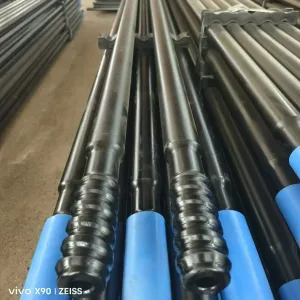
Stope Drilling Rod – Heavy Duty Coupling Sleeve Type for Bench Stoping
Category: Shank Drill RodBrowse number: 41Number:Release time: 2026-05-07 02:19:47This stope drilling rod is designed for bench and shrinkage stoping in metal mines. It features a heavy-duty coupling sleeve connection that withstands high impact and rotational forces.
News
Category:
No search results found!
Case
Category:
No search results found!
Video
Category:
No search results found!
Download
Category:
No search results found!
Job
Category:
No search results found!
Featured Products
-
NEWS
Stope Drilling Rod – Heavy Duty Coupling Sleeve Type for Bench Stoping
Learn more



 Phone
Phone E-mail